DECATHLON · 2025
Leading a multi-market homepage redesign
Aligning teams and countries around one homepage vision, without delaying a critical platform migration.


TL;DR
Role
Senior Product Design Manager, Upper Funnel
OVERVIEW
IMPACT
Protecting France's platform migration by delivering on time, and increasing top component CTR by +40%, whilst aligning teams on a long-term modular and personalised homepage vision.
THE BACKGROUND
Inherited experience
Decathlon was moving its countries onto a new ecommerce platform following a major rebrand, which had been done by an external agency. Whilst the new homepage was visually ambitious, it had been designed without consideration for how countries actually traded: frequent promotions, several commercial messages and local specificities.
Two months before France's planned migration, the homepage top component became a blocker. The existing experience didn't support the commercial needs of Decathlon's largest market, and delaying the launch would have affected the wider migration plan.

OBJECTIVE
Create one homepage direction to align countries and keep the migration on track.
WHAT I DID
Set the direction and enable the team
I first aligned my Product, Engineering and Data peers on the launch-critical issues, considering the scope and success metrics (CTR + CVR). Whilst the main issue was one component, I used it as an opportunity to look at the homepage as whole.
I tasked the team to run UXR with both internal and external (users (countries and customers), and synthesise the information to get a full picture of the homepage's performance and gaps. The evidence showed clear problems on both mobile and desktop, while exposure dropped by around 90% as users moved down the page.
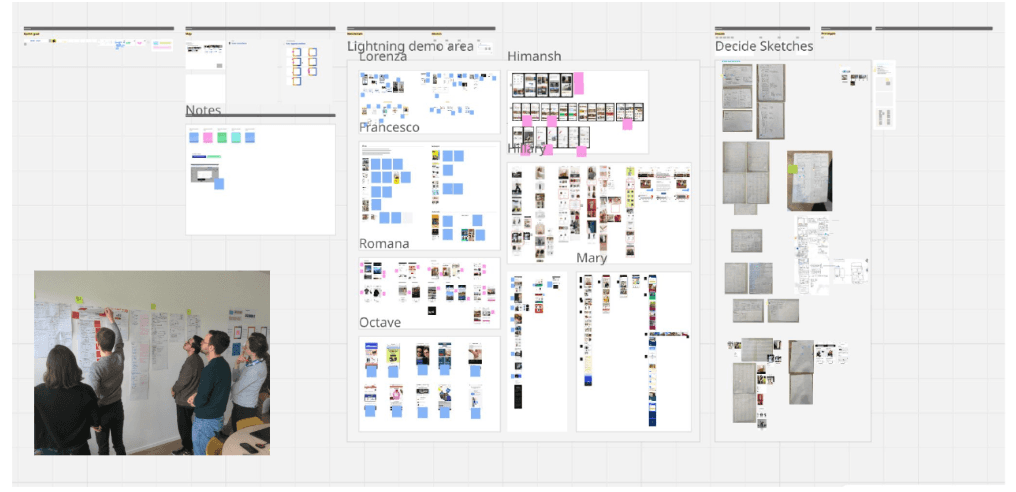
Together with my leadership counterpart and considering the time-pressure, I decided to run a design sprint. Whilst the team had full ownership of the sprint, I stayed hands-on by checking in at the start, midpoint and close to unblock decisions without taking the work back from them.

THE OUTCOME
A staggered launch
Through the sprint, the team defined a homepage vision with both a short-term and a long-term approach, agreeing on a staggered launch in order to protect the migration date: we focused the first release on the homepage components needed for migration and staggered the rest.
The new design replaced the single, restrictive hero with a more flexible component that could carry several commercial messages. It reviewed the hierarchy of the page, gave each component a purpose and created a base for future personalisation.
the challenge
Design as a mediator
However, after the initial share-out the team received pushback from some countries who felt like their needs weren’t addressed. I had to manage the escalation and reframe the global vs local conversation.
This became a learning and changed how Design worked with countries: whilst the relationship with the market used to be mostly managed by PMMs, I asked for designers to join the country feedback sessions directly for larger initiatives instead of receiving second-hand requirements through intermediaries.

IMPACT
business
product
General improvement from previous designs, with positive user testing and +40% CTR on the top component. It was the first step toward a personalised experience vision.
team
Design became recognised as a strategic partner, leading the sprint and repairing a strained relationships with key countries stakeholders.
Reflections
EARLY INVOLVMENT
In hindsight, I would have create direct, structured feedback loops with country teams from the start. The project worked, but part of the tension came from Design receiving their needs too late and through too many layers.
bALANCE SUPPORT WITH AUTONOMY
Under time pressure, leadership is about stripping down to the essentials and where my support will move the needle, whilst letting teams do their work. It increased the team’s motivation and sense of ownership, and by being ruthless with the scope it allowed them to focus their efforts on what mattered most.